Showing posts with label Museum Swag. Show all posts

August 20, 2023

Going with Gaudí in Barcelona

Barcelona, a city known for its artistic fervor and architectural wonders, owes much of its unique charm to the genius of Antoni Gaudí. His imaginative creations have left an indelible mark on the city's skyline, inviting visitors to embark on a journey through a world of playful forms, vibrant colors, and unparalleled creativity. In this walking guide, we'll take you through the top Gaudí sights in Barcelona, offering a glimpse into the visionary mind of one of history's most celebrated architects.


Sagrada Família

No exploration of Gaudí's Barcelona is complete without a visit to the iconic Sagrada Família. This basilica, still under construction after more than a century, is a testament to Gaudí's unwavering dedication. As you approach its intricately designed façades towering above you, you are met with an astonishing fusion of Gothic and Art Nouveau elements. Step inside to be greeted by a kaleidoscope of colors, where light filters through stained glass windows, creating a breathtaking display of hues that dance across the interior. The Sagrada Família embodies Gaudí's architectural philosophy—marrying nature, spirituality, and innovation into a single masterpiece.


Park Güell

Continue your journey to Park Güell, a whimsical wonderland that seems to have sprung from a fairy tale. As you wander through its mosaic-covered walkways and interesting sculptures, you will be transported to a world where nature and art converge. The vibrant tiles, organic forms, and panoramic views of the city make this park a true reflection of Gaudí's unmatched approach to architecture. Whether you're exploring the iconic lizard sculpture or marveling at the enchanting Hypostyle Hall, every corner of Park Güell is a celebration of color and imagination.

Casa Batlló

Next on our Gaudí trail is Casa Batlló, an architectural gem that stands as an example of the architect's boundless creativity. Its undulating façade, adorned with colorful tiles and intricate balconies, is a spectacle of natural shapes and imaginative design. Entering, one experiences a world of fluid lines, curved walls, and a breathtaking central light well that bathes the interiors in natural light. Gaudí's meticulous attention to detail is evident in every corner of this building, where color and form harmonize to create an atmosphere that is both dreamlike and inspiring.


Casa Milà (La Pedrera)

Continue your exploration to Casa Milà, also known as La Pedrera. This unconventional apartment building is a masterpiece of sculptural architecture, where the curving stone façade evokes the texture of waves and wind-swept dunes. As you ascend to the rooftop, you'll encounter an otherworldly landscape of chimneys and staircases that seem to belong to an alternate reality. Gaudí's vision of functional beauty is evident in every edge and contour, turning an ordinary building into a mesmerizing work of art.


Casa Vicens

Venture to Casa Vicens, often referred to as Gaudí's "first house," to discover a hidden gem that showcases the architect's early creative brilliance. The building's intricate ornamentation, vibrant tiles, and harmonious blend of Moorish and Catalan styles offer a glimpse into Gaudí's evolving artistic vision. As you explore its interior, you'll find a vibrant fusion of colors and patterns that speak to Gaudí's fascination with nature and cultural influences.

Palau Güell

Conclude your Gaudí tour with a visit to Palau Güell, a palace that exemplifies Gaudí's ability to infuse opulence with innovation. This mansion's lavish interiors, adorned with rich materials and intricate details, are a true display of Gaudí's skill in creating spaces that are both grand and inviting. From the ornate ironwork to the celestial ceiling of the main hall, Palau Güell is a symphony of colors and textures that reflects Gaudí's mastery of his craft.


As you wander through Barcelona's streets, encountering Gaudí's architectural marvels, you will be transported to a world where imagination knows no bounds. Each sight showcases his unparalleled ability to blur the lines between architecture and art, nature, and design. Gaudí's legacy lives on in the vibrant colors, organic forms, and innovative structures that continue to inspire and captivate visitors from around the world. In Barcelona, the spirit of Gaudí's genius is woven into the very fabric of the city, inviting you to embark on a journey of wonder and awe.

Continue »

Madrid's Top 5 Museums

Madrid, the vibrant capital of Spain, is a haven for art enthusiasts and cultural explorers. Within its bustling streets lie some of the world's most impressive museums, each its own canvas adorned with a spectrum of colors and experiences. Madrid also boasts generally great weather year-round, but on those sneaky cold or rainy days, spending time warm inside the art museum scene is definitely a valuable transfer of time well-spent. Join us as we delve into a chromatic journey through the best 5 Madrid museums, where the masterpieces and stories they hold are as diverse as the hues they showcase.


1. Prado Museum

Start with the world-famous Prado Museum, a realm where earthy tones and opulent golds converge in a symphony of elegance. This esteemed museum houses an exceptional collection of European art, with works from luminaries like Velázquez, Goya, and Bosch. The deep, warm hues of Velázquez's "Las Meninas" envelope you in a sense of regal intrigue, while Goya's intense contrasts evoke a spectrum of emotions. The Prado is a blend of classical beauty, a palette of rich tones that make one feel a sense of timeless grandeur.

2. Reina Sofía Museum

Venturing next to the Reina Sofía Museum, you encounter a vivid explosion of colors. As the premier showcase of modern and contemporary art, the museum's collection thrives with daring shades and thought-provoking compositions. Picasso's iconic "Guernica" resonates with monochrome blues and intense reds, conveying the anguish of war with every brushstroke. It is the most famous work of art from Picasso and arguably the most famous artwork to ever come out of Spain, especially in the political context. Miró's playful forms and vibrant colors offer a refreshing burst of creative energy, igniting the imagination and stirring the soul.

3. Thyssen-Bornemisza Museum

You are now prepared for the chromatic symphony at the Thyssen-Bornemisza Museum, a gallery that traverses the expansive spectrum of art history. From the radiant luminosity of Impressionist masterpieces to the bold abstractions of the 20th century, this museum's collection is a kaleidoscope composition of colors, styles, and visions. Monet's ethereal water lilies transport you to serene waterscapes awash in pastels, while Kandinsky's vivid abstracts electrify the senses with their dynamic palette.


4. Sorolla Museum

Next on our list is the Sorolla Museum, and you'll be enveloped in a sun-drenched realm of light and color. Dedicated to the works of Joaquín Sorolla, this museum's collection exudes the warm radiance of Spanish landscapes and coastal scenes. The artist's penchant for capturing the interplay of sunlight and shadow imbues each canvas with a luminous quality. Shades of cerulean, ochre, and sienna transport you to the seaside, where sunlit waves dance and dappled gardens bloom in vivid brilliance.

5. CaixaForum Madrid

Lastly, make your way to the vibrant contemporary scene at CaixaForum Madrid. This cultural center hosts a dynamic array of exhibitions and events (as it also does in several large Spanish cities), showcasing a spectrum of modern artistic expressions. The ever-changing displays, from multimedia installations to cutting-edge photography, paint the walls with an ever-evolving palette of colors and ideas. The juxtaposition of vibrant neon hues against stark industrial backdrops offers an immersive experience that challenges conventional perceptions of color and form.


In the heart of Madrid, a world of artistic marvels awaits—one where each museum is a canvas painted with an array of colors that stir emotions, narratives, and connections. From the timeless elegance of the Prado Museum to the modern vibrancy of CaixaForum, these institutions come together to form a symphony of hues that resonate with visitors from around the world. Whether you're drawn to the deep, moody tones of classic art or the vivid explosions of contemporary creativity, Madrid's museums promise an unforgettable journey through the various lenses of human expression.


Madrid's Top 5 Museums on iOS & Android
Find the rest of my navigational GPSmyCity app article cities HERE (newest) and HERE (older).

Continue »

August 14, 2023

Top 5 FREE on 1st Sunday Paris Museums

Many of Paris' incredible museums are free on the first Sunday of each month! If you are fortunate enough to have scheduled your visit early in the month and on the weekend, then you can take advantage of these free entries. But even if you are not in town with the right timing, these five museums are still absolutely worth the visit and you can learn which one(s) will suit you best from this article.


1. Musée de Cluny - Musée national du Moyen Âge: Unveiling Medieval Splendors

Transport yourself to the enchanting world of medieval Europe at the Musée de Cluny, known as the Musée national du Moyen Âge. This museum is actually my very favorite in all of Paris because of the time-travel atmosphere I experience in the building and exhibits. Nestled in the heart of the Latin Quarter, this museum preserves and celebrates the art, architecture, and lifestyle of the Middle Ages. 

The museum's exquisite collection includes illuminated manuscripts, intricately carved sculptures, and remarkable tapestries such as "The Lady and the Unicorn," which captivates with its mystique and symbolism. The highlight, however, is its location atop the remains of Gallo-Roman thermal baths, adding a layer of historical depth that few museums can offer.


2. Musée Rodin: Embracing the Soul of Sculpture

For a rendezvous with the masterpieces of one of the greatest sculptors in history, the Musée Rodin is a haven of artistic brilliance. Set amidst lush gardens and elegant architecture, this museum is dedicated to the works of Auguste Rodin. The stunning "The Thinker" and "The Kiss" are iconic sculptures that grace the museum's grounds, while the interiors house a diverse collection that showcases Rodin's mastery in capturing human emotion and form. 

The ambiance of the museum's gardens, featuring several of Rodin's monumental sculptures, creates an immersive experience that transcends time and space. And fun fact: you can enter Rodin's gardens for just €1, and the gardens contain basically all of the sculptures you would see in the interior anyway!


3. Musée Gustave Moreau: A Portal into the Artist's Imagination

This is THE Instagram staircase, people! Think of it as vanilla peeling into the lush decor, perfectly draping itself among the grandeur.

The captivating world of a 19th-century Symbolist painter is at the Musée Gustave Moreau. Housed in the former residence of the artist himself, this museum offers an intimate exploration of Gustave Moreau's dreamlike and fantastical creations. As you ascend the ornate staircase and traverse the artist's studio, you'll encounter a treasure trove of paintings, sketches, and personal artefacts. The museum's unique layout, with rooms and walls densely adorned with art, provides a glimpse into Moreau's artistic process and his fascination with mythology, history, and allegory.


4. Musée de l'Orangerie: Immersed in Monet's Water Lilies

Imagine being enveloped by the soothing hues of Monet's iconic Water Lilies series, their tranquil beauty stretching as far as the eye can see. This mesmerizing experience awaits at the Musée de l'Orangerie, where Claude Monet's immersive masterpieces are displayed in two oval rooms designed to evoke a sense of harmony and contemplation. 

Beyond Monet's enchanting works, the museum also houses a collection of Impressionist and Post-Impressionist paintings, making it a haven for those seeking to connect with the artistic movements that shaped modern art. There are no photos allowed in the exhibition areas, so this photo is of Monet's actual gardens in Giverny and from what his water lily paintings are based.


5. Musée d'Orsay: A Grand Voyage through Art History

This is the most famous museum on this list, and normally included in a tour of Paris museums. If you are seeking a grand voyage through art history, the Musée d'Orsay offers a captivating narrative spanning from the mid-19th century to the early 20th century. Housed in a stunning Beaux-Arts railway station, the museum showcases a breathtaking collection of Impressionist, Post-Impressionist, and Art Nouveau masterpieces. 

From Van Gogh's vibrant self-portraits to Degas' graceful ballerinas and Renoir's scenes of Parisian life, the museum offers a comprehensive view of the artistic revolutions that defined an era. Its vast collection also includes sculptures, decorative arts, and photography, making it an all-encompassing exploration of creativity and innovation. A wonderful highlight here is standing inside the enormous clock face looking out over the Seine River.


I hope you are able to enjoy these five amazing museums as much as I have over the years, and maybe even time your trip out with the free entry on the first Sunday of the month!


Top 5 FREE on 1st Sunday Paris Museums on iOS & Android
Find the rest of my navigational GPSmyCity app article cities HERE (newest) and HERE (older).


Continue »

One Day in Valencia

Valencia is for sunshine and warmth, and walking all over the city's broad boulevards and abundant parks and squares is a great way to get to know this beautiful beach town!


This is a perfect introduction day to Valencia, and, of course, the itinerary here can also be spread out over two or three days. Valencia may play more of a back-up role to its more famous sister beach city of Barcelona, but Valencia has more than enough to offer visitors and locals alike.

Mercado Central de Valencia

Start your day at the main city market, getting a traditional Spanish tortilla or bread with tomato for breakfast. I would recommend selecting several snacks for the rest of the day to take with you for your breaks in between sights.

La Lonja de la Seda de Valencia

Many buildings in Valencia are quite imposing and impressive, and La Lonja is no exception! A UNESCO World Heritage Site, La Lonja de la Seda (The Silk Exchange) is a masterpiece of Gothic architecture. Built in the 15th century, this building served as a hub for silk trading and showcases intricate details, including its iconic spiral columns and exquisite craftsmanship.

Plaça de la Reina

Plaça de la Reina, or Queen's Square, is a central and vibrant square in Valencia. It's a popular meeting point, surrounded by charming cafes and shops. The square offers a glimpse into daily Valencian life and is often bustling with neighborhood families and tourists together, enjoying the charming atmosphere and picturesque views.

La Seu de València

La Seu, also known as Valencia Cathedral, is a stunning example of religious architecture. Its fusion of Gothic, Romanesque, and Baroque styles creates a unique visual experience. The Miguelete Tower offers panoramic views of the city, and the Holy Grail, claimed to be the chalice used during the Last Supper, is housed within its walls.


Plaça de la Verge

Plaça de la Verge is a historic square that serves as a cultural and spiritual focal point in Valencia. Surrounded by iconic landmarks such as the Valencia Cathedral and the Basílica de la Mare de Déu dels Desemparats, the square is often the site of religious processions and public events.

Portal de Valldigna

The Portal de Valldigna is a surviving remnant of Valencia's medieval city walls. This historic gateway showcases the city's rich history and offers a glimpse into its past. The portal serves as a reminder of Valencia's evolution from a fortified city to a vibrant urban center.

Museu de Belles Arts de València

For art enthusiasts, the Museu de Belles Arts de València is a treasure trove. This art museum boasts an impressive collection of European paintings, sculptures, and decorative arts spanning from the Middle Ages to the 19th century. It's a cultural hub that allows visitors to explore the evolution of art through the ages. And the best part - it's always free entrance to the public!


Valencia Green Belt Parks

Valencia is renowned for its commitment to green spaces, and the Green Belt Parks exemplify this dedication. Comprising Turia Gardens, Cabecera Park, and Bioparc Valencia, these interconnected parks offer serene landscapes, outdoor activities, and a chance to connect with nature within the heart of the city. You can access the greenery from the previous museum, take a rest and snack break, and start heading east toward the main attraction of...

Ciudad de las Artes y las Ciencias

The City of Arts and Sciences is a futuristic complex that showcases Valencia's modern architecture and innovative spirit. This stunning complex houses a planetarium, an opera house, a science museum, an oceanographic park, and more. Its avant-garde design is a testament to Valencia's embrace of contemporary culture.


La Marina

Valencia's port is a lively waterfront area that offers a blend of entertainment, shopping, and dining experiences. This fun district is known for its vibrant nightlife, busy markets, and a variety of international and local cuisine, making it a favorite spot to hang out on the beach.


Casa Montaña

Casa Montaña is a historic bodega that encapsulates the essence of Valencian culture. Established in 1836, it is renowned for its traditional Spanish wines and tapas. The authentic atmosphere and charming interior make it a delightful place to savor local flavors and immerse yourself in the city's culinary heritage.

Valencia's draw lies in its seamless blend of historical significance and contemporary dynamism. These remarkable places represent just a fraction of what this captivating city has to offer, inviting all of us to explore its vibrant past and promising future.


One Day in Valencia on iOS & Android
Find the rest of my navigational GPSmyCity app article cities HERE (newest) and HERE (older).

Continue »

Top 5 Always FREE Paris Museums

Paris turned me into a museum lover! It took me living there nearly two years before I set foot into the Louvre, and it ended up being the start of a wonderful journey through art and history all over the city. One thing that definitely helped my appreciation process was starting with the free museums. This meant that even if I did not enjoy my experience, I had not lost any money over it. Let's just say my job was not exactly on a high-level museum budget at the time.

One key interesting point is that if you are a student up to the age of twenty-five, you can get into most of Paris' fabulous museum offerings for totally free the entire time. This article is more geared to those of us over the quarter-of-a-century mark who would like to enjoy some high society French culture without the price tag. 

Here are my favorite Top 5 Always FREE Paris Museums! 


1. Musée Carnavalet

I cannot get enough of this place. It's sprawling, it's quirky, it's full of artefacts you would find in a grandparent's attic. And that's essentially what Carnavalet does as the self-proclaimed "History of Paris Museum." It takes you through so many different versions of the city, it is about as close to time travel through Paris as you can get. Also, each room is so beautiful and unique, you can tell the curators have paid close attention and care to every single detail to show the best of what Carnavalet and Paris have to offer.


2. Musée de la Vie de Romantique

This is the most darling museum in Paris. It's akin to sneaking into a famous person's private cottage and getting to spend as much time as you want looking at all of their stuff and pretending you get to live there, too. It is especially a treat for lovers of the writer George Sand and the artist Ary Scheffer. Do spend some quiet contemplative time in the tea house garden, imagining yourself there in the company of the 19th century literary elite.


3. Petit Palais

For a more grandiose experience, head over to the Petit Palais in the ritzy Champs-Elysées area. But for all the outward pretension, the Petit Palais is a very welcoming and sweet exhibition space. The high ceilings provide for a lot of natural light and the café seating in the courtyard is worth the quick coffee break. It is a gorgeous way to spend a free hour on your way to other sights in Paris (Arc de Triomphe, Les Invalides, or the Eiffel Tower, to name a few).


4. Maison de Victor Hugo

Aside from the fact that Victor Hugo got to live in one of the most beautiful squares in Paris, Place des Vosges, it is a very realistic glimpse into what his daily life was like. This space is most appreciated by fans of Victor Hugo's work, of course, namely The Hunchback of Notre Dame and Les Misérables. This is another literary-focused museum, and rightly so, as the French do love a good read.


5. Musée Cognacq-Jay 

You can put on your favorite fancy look for this museum, as you will be strolling through the private collections of the married founders of La Samaritaine department store, Théodore-Ernest Cognacq and Marie-Louise Jaÿ. The museum has dubbed itself "the taste of the 18th century" (le goût du XVIIIe) and the insight into how the nouveau riche would have collected paintings, sculptures, and interior design from that time is unmatched.

Another great thing about these free museums? You can easily visit all of them in the span of just one day! Make each as short or as long of a visit as you want to, and enjoy the reflections of art and culture as time has progressed. I hope you find as much beauty and magic in each of these spots as I have!


GPSmyCity

Top 5 Always FREE Paris Museums on iOS & Android
Find the rest of my navigational GPSmyCity app article cities HERE (newest) and HERE (older).

Continue »

July 25, 2020

German Swag 101: The Integrated Immigrant - Americans

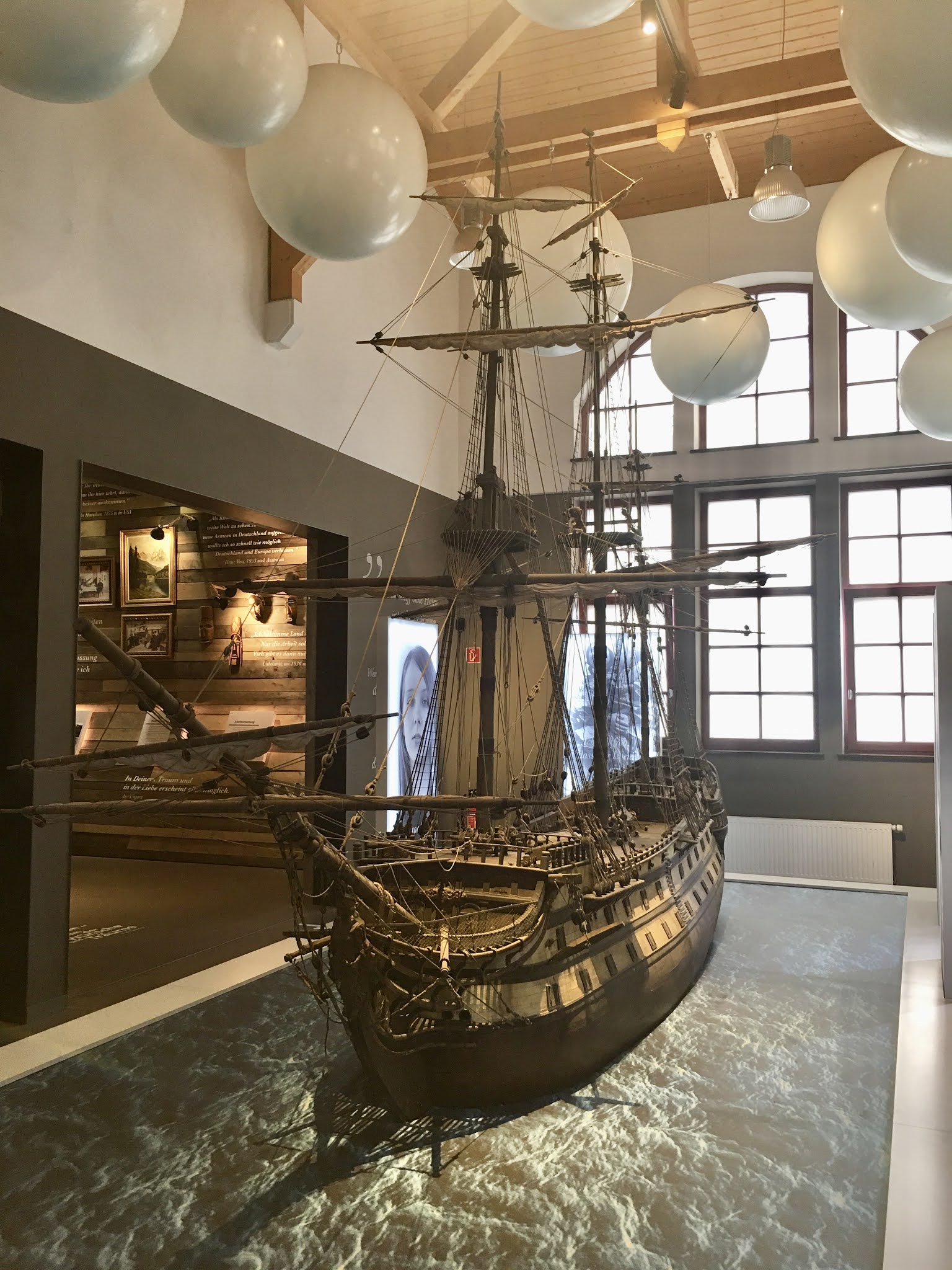
The only reason I knew about the Ballinstadt Museum in Hamburg was because it was advertised on the back of a city map that someone left at our apartment after a visit. I can’t for the life of me remember who went through Hamburg on their way to us, but there was the map in my travel keepsakes box, calling me north. I opened the map for the first time on the last leg of my train journey, and the Ballinstadt Emigrant Museum immediately spurred my interest.


What a totally cool and unique experience this museum is! There was an entire compound village in this area that Albert Ballin — son of Danish-Jewish immigrants to Germany — built to house and prepare Germans for their grand voyage across the ocean to the New World. This compound functioned throughout the nineteenth century and just until the 1930s when the Nazis came to power.


Over 5 million Germans journeyed from Hamburg during this time period, many of whom are the reason some crazy percentage of over 60% of white Americans have German heritage. My natural assumption based on our school history classes was that white Americans descended mostly from British heritage. Not. Even. Close.


Living in Germany has taught me SO many things about my own heritage and also more history about America. Like about beer culture and why more breweries have German-derivative sounding names. About dinner time being appropriately on time at 5 p.m. About being early as a virtue. Kindergarten, meat and potatoes, the way white people garden and landscape, the reason older interior design was NOT open-concept, and so many other unnoticed things we take for granted as part of American culture. 


Well. It came from somewhere else. In fact, WE came from somewhere else. With the never-ending tide of arguments on immigration policy in the United States, it would serve us well to think hard back to our ancestors. Ballinstadt does just that: it takes you back.


There is absolutely a high chance that my ancestors walked through the very same emigration halls on their way to America. We all come from somewhere, and most of my heritage can be traced to Germany and Ireland. One of my maternal ancestors, Mattheus Schoch, came to Pennsylvania from Germany to work as an indentured servant for several years before securing his free status.


These people — just as real as you or me — took very real risks and made huge sacrifices to uproot their entire lives to pursue what would hopefully be a brighter future for themselves and their families.


Once they got on the ship, there was no turning back. Some wouldn’t survive the trip, some boats sank, and, for sure, not everyone found what they were looking for upon their arrival.


But The American Dream was such a powerful concept to draw literally millions of people away from their homeland. I understand that my own move back to the Old World is a bit of a reverse ideal, but I like to think that I am honoring my heritage by now speaking German and representing America back in the home country.


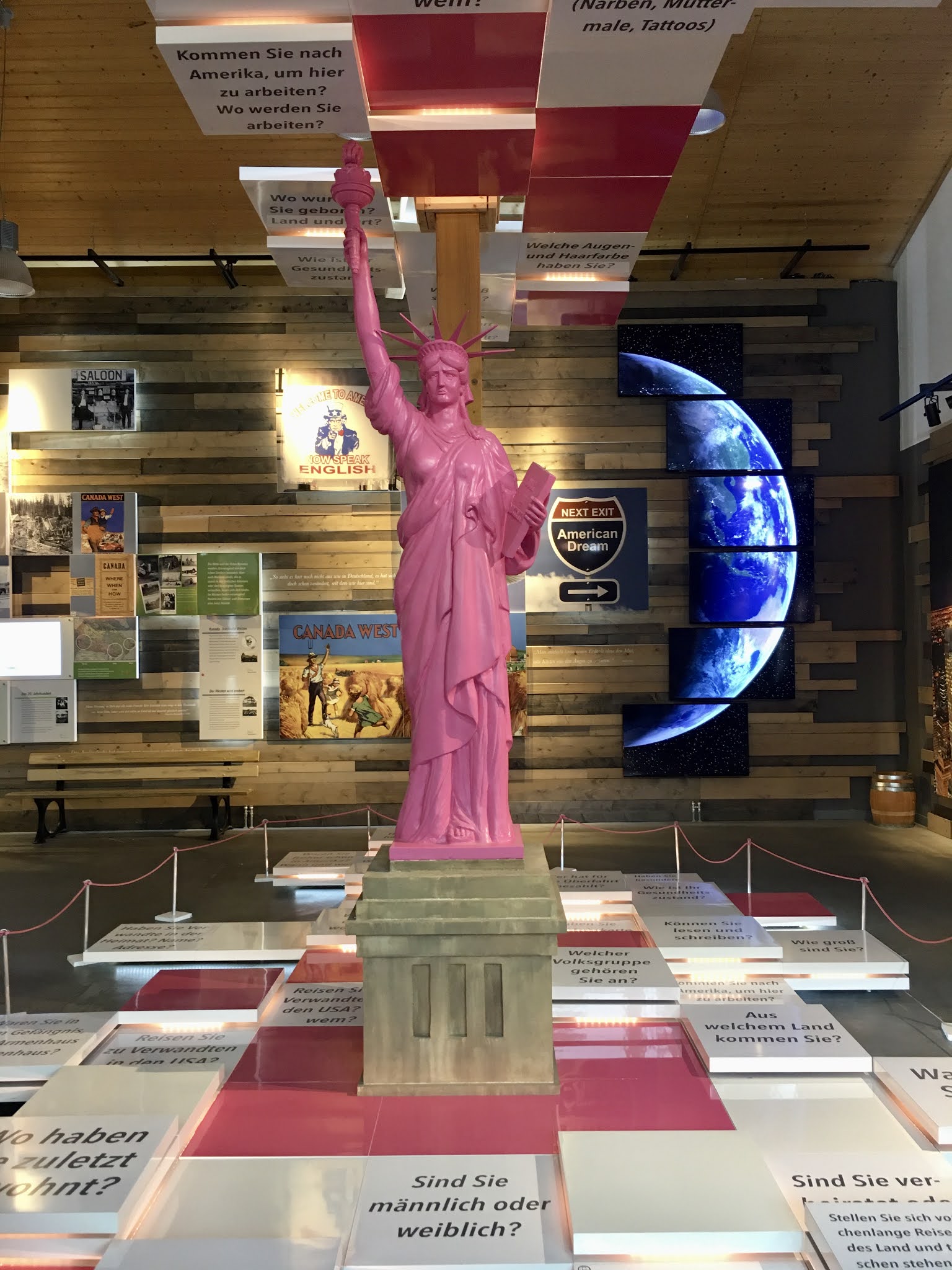
These questions surrounding Lady Liberty are very poignant to me because I have been asked the same questions as an immigrant in France and Germany. I can actually relate to the anxiety of making sure the question is understood to produce the correct answer and the stress of knowing that one wrong move could prevent my papers from being approved. From emigrant status in your home country to immigrant status in your new country, there is a huge shift in acceptance and support. An emigrant leaves their home country usually with a slap on the back, cheers, and “good for you’s” all around. An immigrant arrives in their new country to difficult paperwork in another language, suspicious border control officials, and a severe lack of easy access to resources.


For our personal arrivals to new countries, simple tasks like getting a doctor appointment or asking for directions became overwhelmingly difficult. It took three months to get an internet connection. We drank tea for medicine when our imported supply ran out. We gave up trying to find super specific ingredients in stores. If we couldn’t figure it out on our own or through a local friend, whatever it was had to become part of the past. New solutions were found; we had to adapt.


And our immigration story has been EASY, compared to most accounts. For as stressful and frustrating as our journey has been over the past decade, we are very grateful for our experience and aware that most immigrants to many modern countries have not had the same opportunities or connections as we have had. 


This display reminds its readers, “Don’t forget your German language!” As 21st century Americans, we do not realize how much World War I and World War II severely impacted our cultural heritage. Take the time to do some research on German settlements, schools, and churches in America before World War I struck. The Midwest was basically German. After WWI, there was a push for more “Americanization” and German culture in America began to diminish. By the time Hitler shoved his way to the front of global uproar, speaking German in America became seen as anti-American. 


This poster is interesting for WAY too many reasons.


Basically, from 1914 until 1945, the German heritage in America transitioned to melding with other white European heritages with the English language, but retained so much of the cultural tendencies I mentioned earlier in this post.


I don’t mind being an immigrant. In most ways, I get to identify as an “expatriate,” which is essentially a snobby way to say “successful immigrant.” I wish it were easier for everyone who wants to live and work in another country to get the right documentation. I have been undocumented before, and it is not fun or exciting. 

For Americans, it is easy to jump on the anti-immigration bandwagon because “they will steal our jobs,” “they won’t pay taxes,” “they don’t speak English,” etc. It would do us well to remember the reality of our ancestors who were also likely discriminated against and not trusted when they entered the American Dream. Just because we “feel” American due to decades or even centuries of integration and forgetting the past, does not change the fact that most of our “American” ancestors were born from immigrants. Our family trees are FULL of immigrants; these people made the decisions that ended up allowing us our American status! 

Can we imagine if these German immigrant families had been separated—children from parents—upon entry into their “better future” in the United States?!

It would do us even better to remember the reality that the white American ancestry stole the land from, enforced taxes upon, and mandated English and religious learning for the actual Native Americans and indigenous peoples of the Americas.

America was born on borrowed [stolen] land. Since we are not going to give it back anytime soon, then it only makes sense to share it with the same kind of brave people as our Great-Great-Great-Great-Great-Great-Great-Grandfathers, like Mattheus Schoch.


Continue »

November 13, 2019

German Swag 101: Mother/Daughter Days in Dresden

I got to take my mom with me to one of my favorite cities in Europe: DRESDEN!!!


We had my parents' flights planned since late May, but it wasn't until the middle of August that my volleyball schedule really came into reality when I joined the Munich third division team. This put one of the weekends my parents would be here in Dresden!


We stayed two nights right smack in the middle of the Altstadt, and spent a perfect day browsing the rebuilt old city. We capped off the night with attending the Sleeping Beauty ballet at the Semperoper!


It was such a perfect trio of days to spend with my mom in such a beautiful place. I will love Dresden no matter who I get to go with, but this trip will always hold an extra special place in my heart. Thank you, Mom, for trusting me with the plans, clothes, and directions!!!

Continue »